The strongest impression is scale. Rooms are modest, doorways are narrow, and the atmosphere is close rather than grand. That’s exactly the point: you’re seeing how Frida lived, not just how she is remembered.
Inside Frida Kahlo House | What it’s really like inside Casa Azul
Step inside Casa Azul and the payoff isn’t size — it’s how close you get to Frida Kahlo’s daily world, from her studio tools to the rooms shaped by illness, love, and work.
- What you’ll notice first: this is a preserved home more than a conventional gallery, so the emotional draw comes from lived-in spaces, personal objects, and atmosphere.
- Look for: Frida’s easel and wheelchair, the traditional kitchen, and smaller details like corsets, folk art, and family photographs.
- Pro-tip: Crowds change the mood quickly in such a compact house. For route planning, timing, and rules, jump to Map and orientation, Top highlights inside Frida Kahlo House, and How to explore the Frida Kahlo House.
What to expect inside Frida Kahlo House?
From the street, Casa Azul looks iconic. Once you cross the threshold, though, the experience becomes much more intimate than monumental. You’re not walking into a vast museum of blockbuster paintings; you’re moving through the home where Frida Kahlo was born, worked, recovered, entertained, and died.
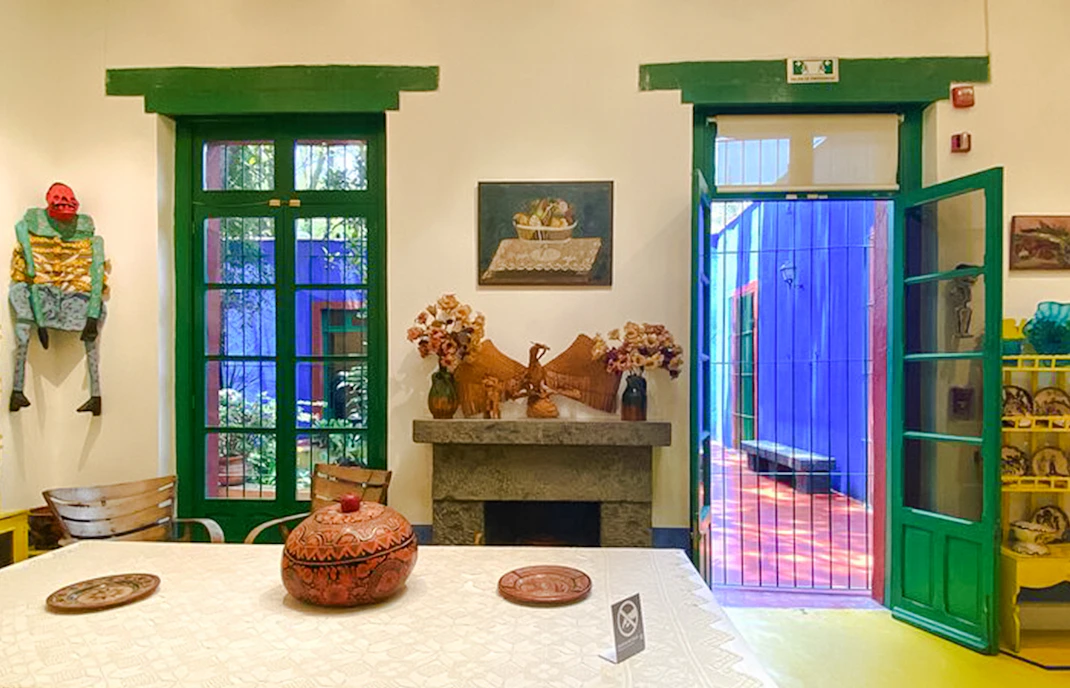
A house that still feels personal
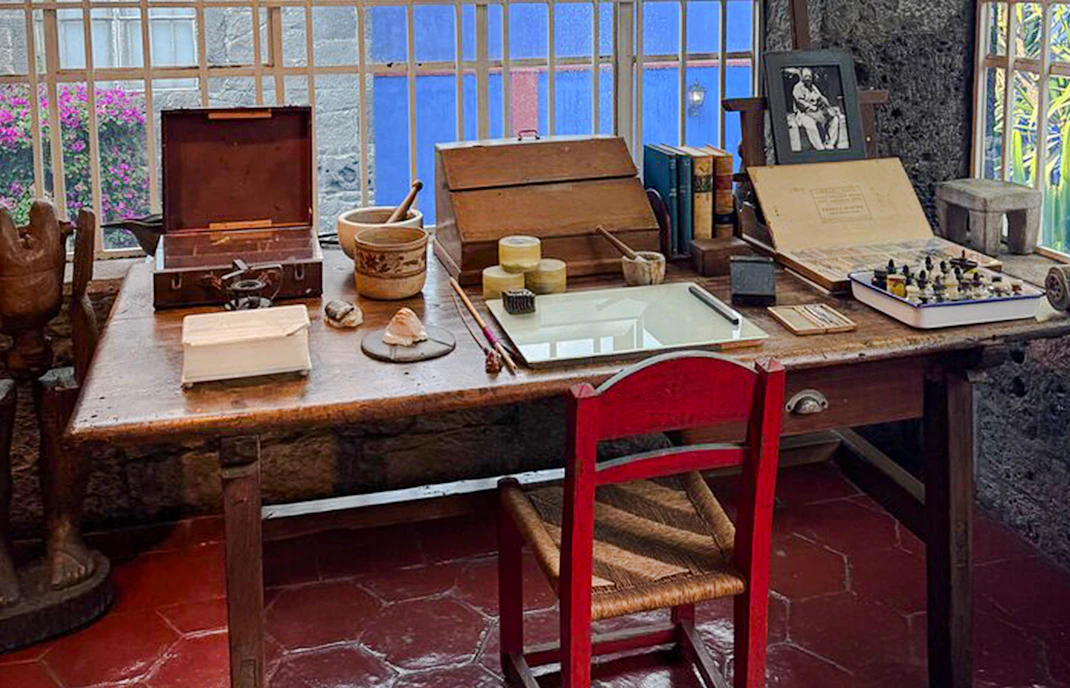
Objects that speak louder than labels
Some of the most affecting things here aren’t framed artworks at all. Clothing, orthopedic devices, family photographs, letters, and furniture reveal the physical reality behind her public image. They turn biography into something concrete.
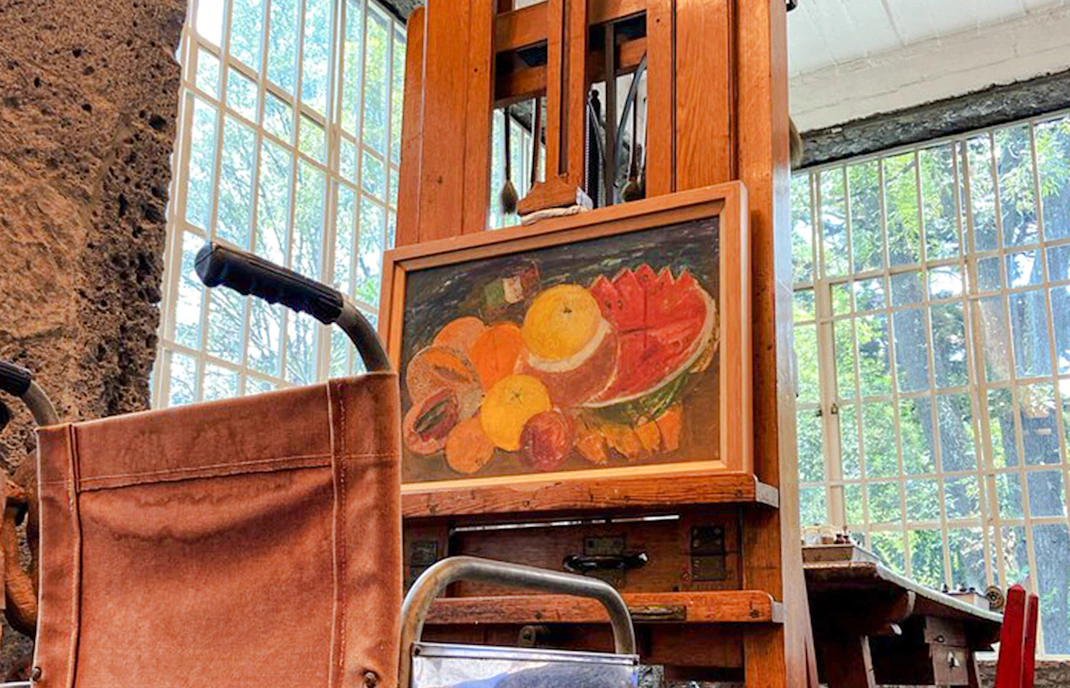
Creative life, not just finished art
Inside Casa Azul, the studio matters as much as any gallery wall. Frida’s easel, wheelchair, paints, and work surfaces make the house feel like an active place of making. The experience is about process, endurance, and daily ritual as much as finished masterpieces.
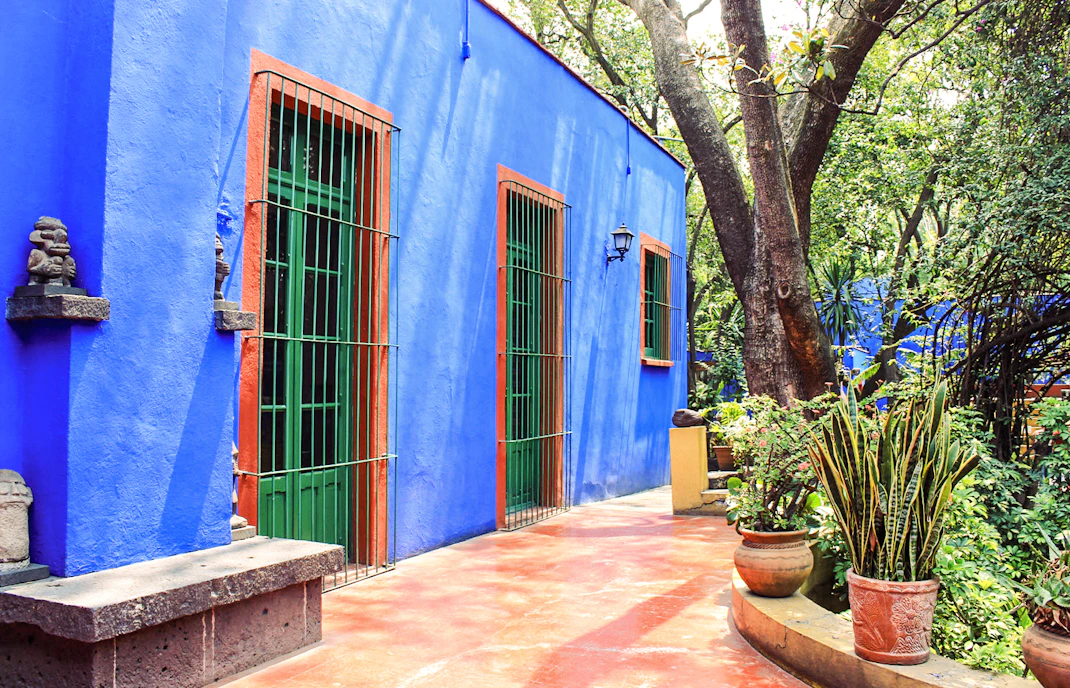
The courtyard changes the mood
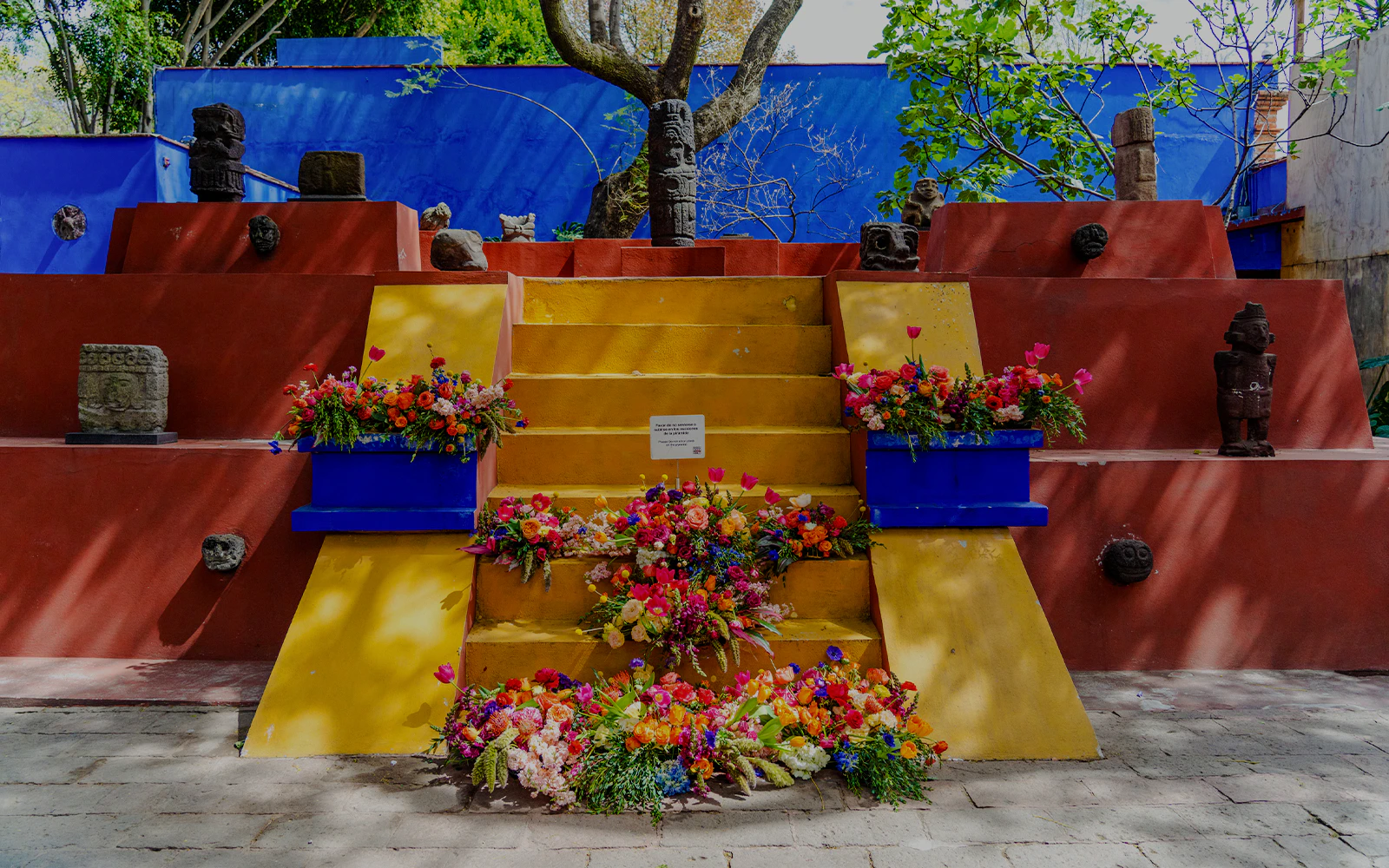
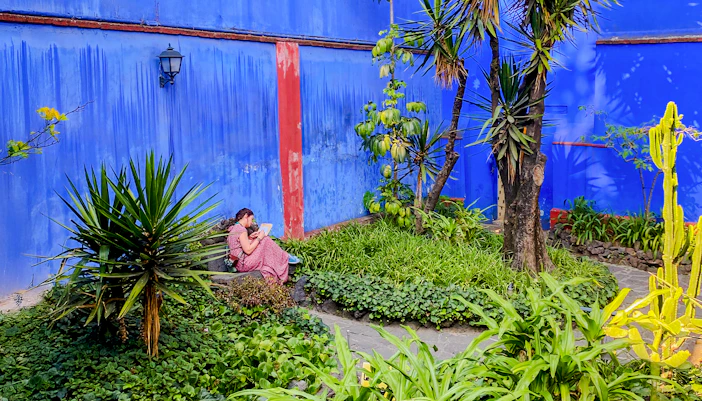
The garden and courtyard give the visit breathing room. After compact interiors, the open-air blue walls, plants, and volcanic stone details slow the pace. It’s where many visitors reset before continuing through the house.
If your time is short, prioritize the studio and the most personal living spaces over trying to read every label. If you want more context, a guided option such as the Small-Group Guided Tour of Frida Kahlo Museum with Anahuacalli Access can help connect the rooms to Frida’s life story without making the visit feel rushed.
Casa Azul is compact, and the route is fairly intuitive once you’re inside. Most visitors move through a sequence of domestic rooms arranged around the courtyard, then into the studio, personal spaces, and garden-facing areas before exiting through the final exhibits and shop. The flow is more linear than exploratory, so you won’t need a detailed floor plan, but bottlenecks can form in smaller rooms where people stop for photos or labels. If you like to move slowly, pause in the courtyard when a room looks crowded, then continue once the cluster clears. An official room-by-room public map is [Information unavailable].
Top highlights inside Frida Kahlo House
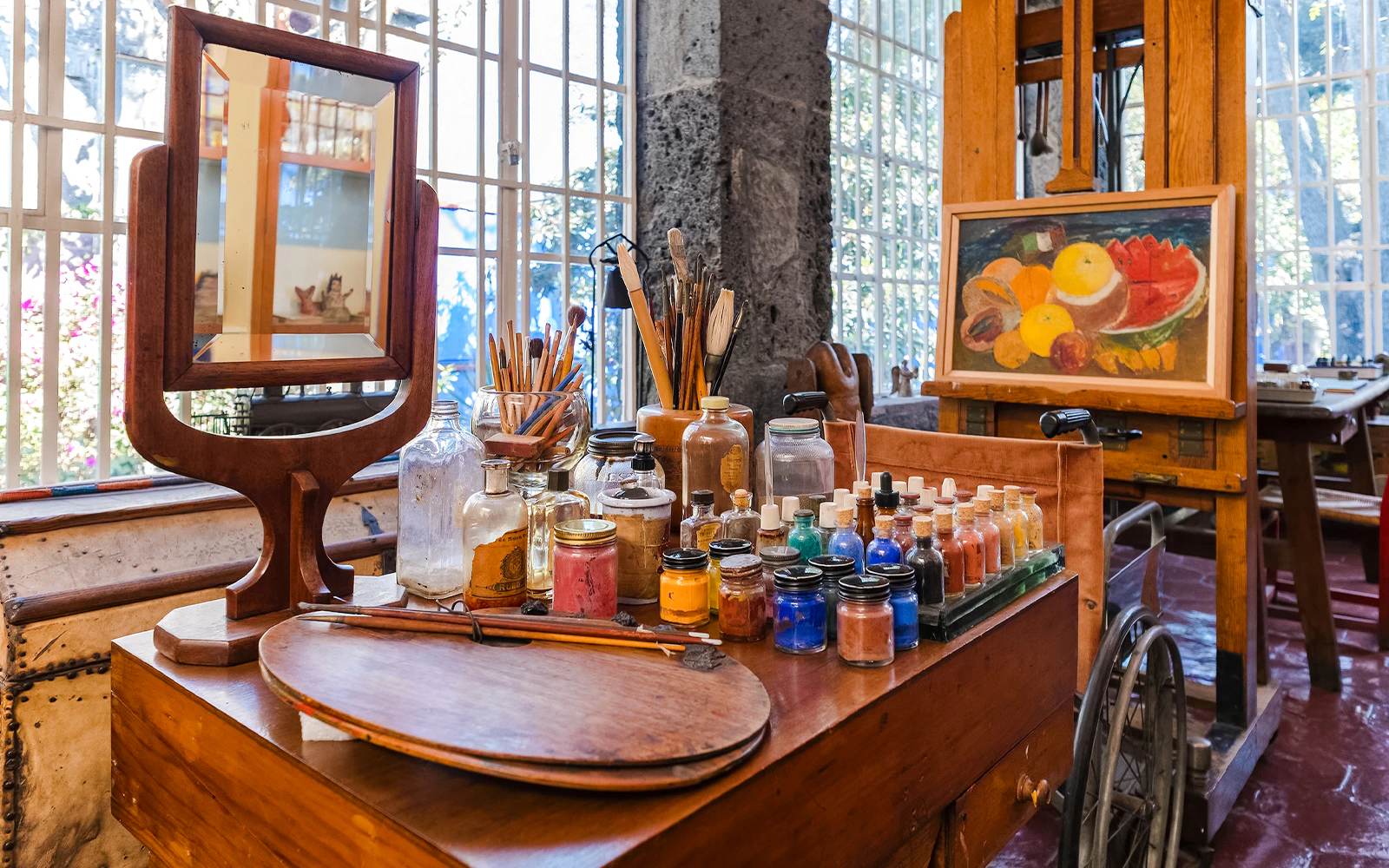
Frida’s easel and wheelchair
The pairing says more than a wall text can. You see how painting and physical pain lived side by side.
Pro tip: Wait a minute for the crowd to shift, then view both together.

Inside Frida Kahlo House
What you discover inside is less a museum circuit and more a sequence of lived spaces that slowly assemble Frida Kahlo’s world.

Entrance rooms and first impressions
You begin in rooms that establish Casa Azul as a real home before it feels like a museum. Domestic furniture, photographs, and everyday objects set the tone early, so you understand the visit as biography in space, not just a display of art on walls.
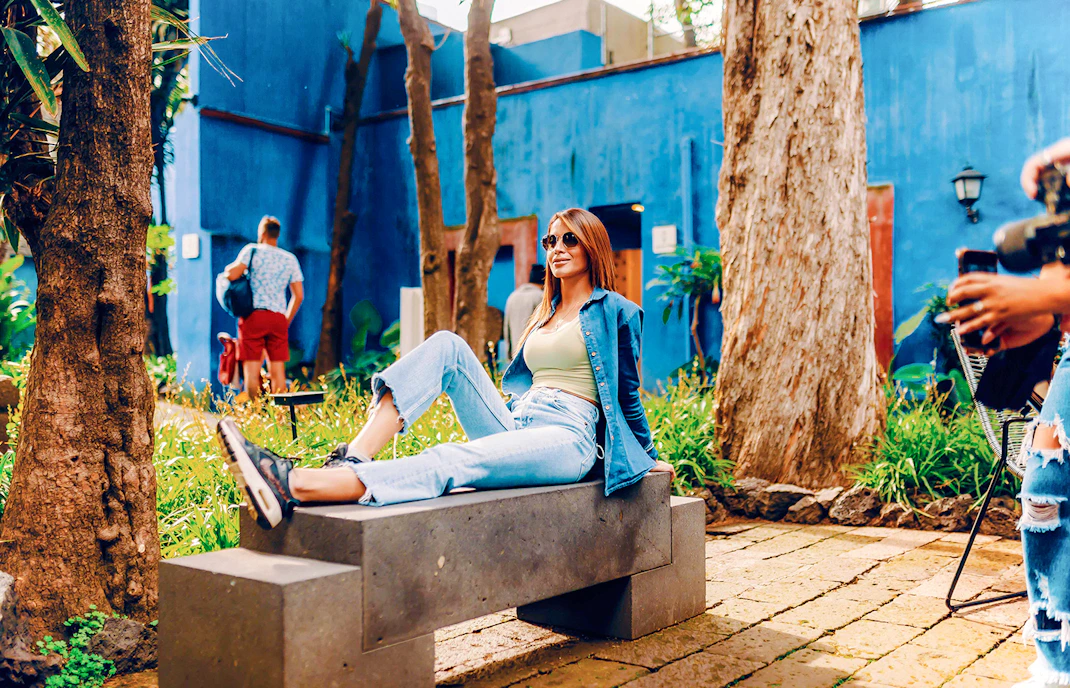
Courtyard and garden
The courtyard acts like the house’s breathing space. Blue walls, plants, volcanic stone, and outdoor sculptures open up the experience after the tighter rooms inside. It’s also where you can reset your pace and take in the relationship between the house, the garden, and Frida’s visual world.
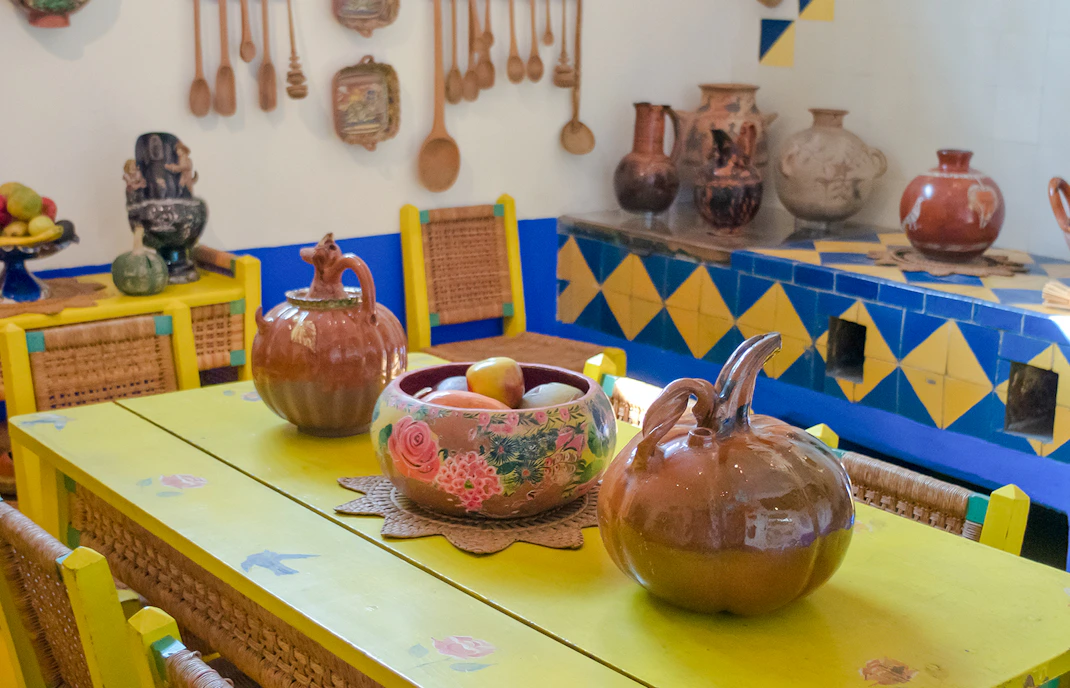
Kitchen and dining spaces
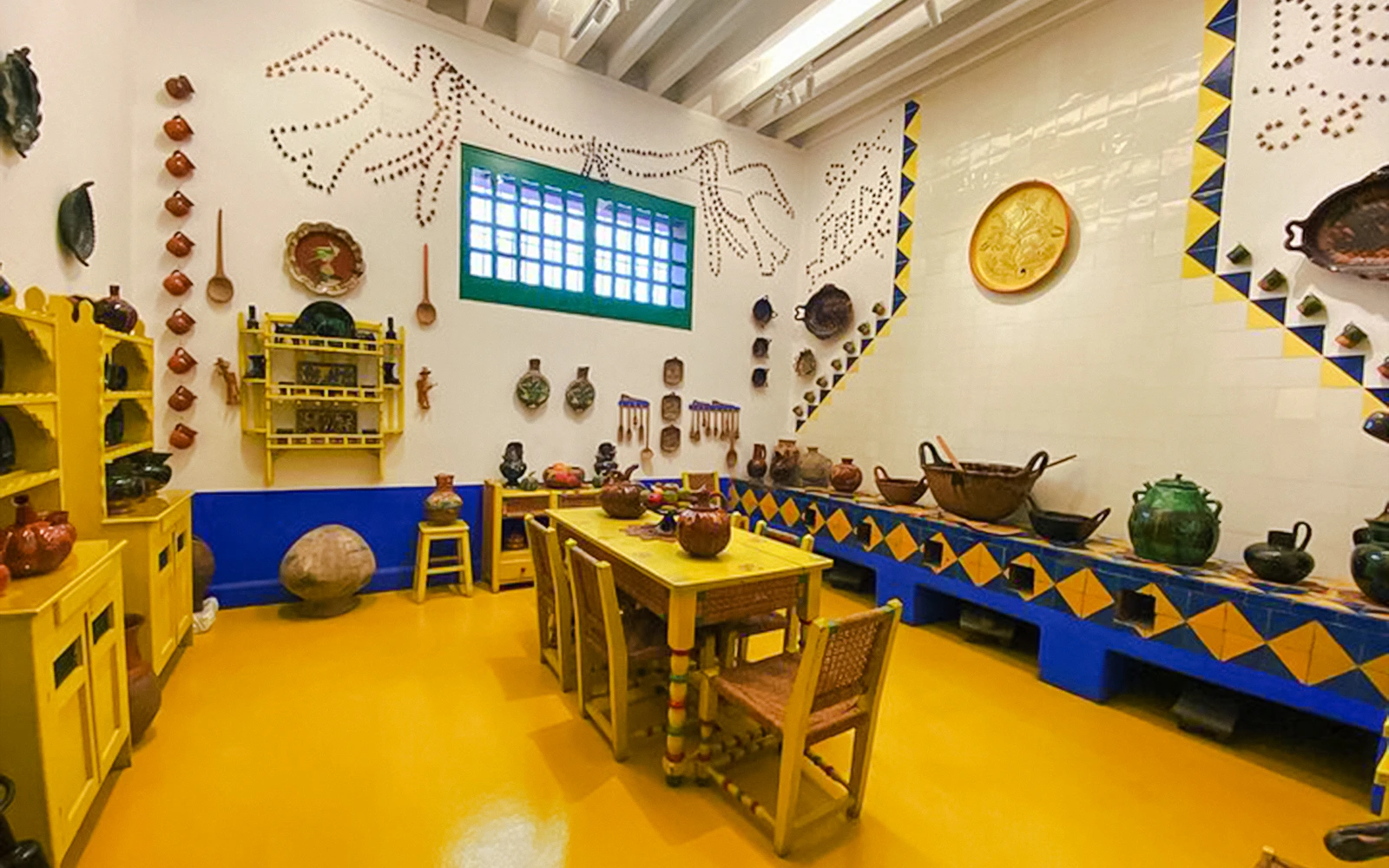
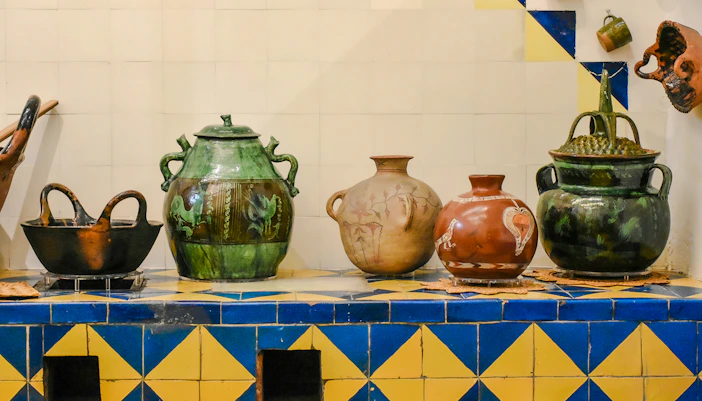
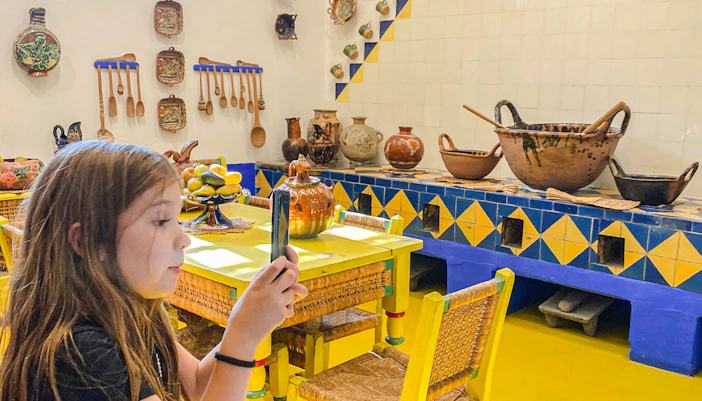
These rooms show how strongly Frida and Diego embraced Mexican folk aesthetics in daily life. Pottery, utensils, decorative arrangements, and color choices make the domestic spaces feel expressive rather than merely functional, helping you read the house as part art statement, part family home.
Studio
The studio is where the visit becomes sharply personal. The easel, wheelchair, tools, and work area show not just that Frida painted here, but how closely art-making was tied to her physical condition, routine, and stubborn discipline. Many visitors spend their longest pause in this room.
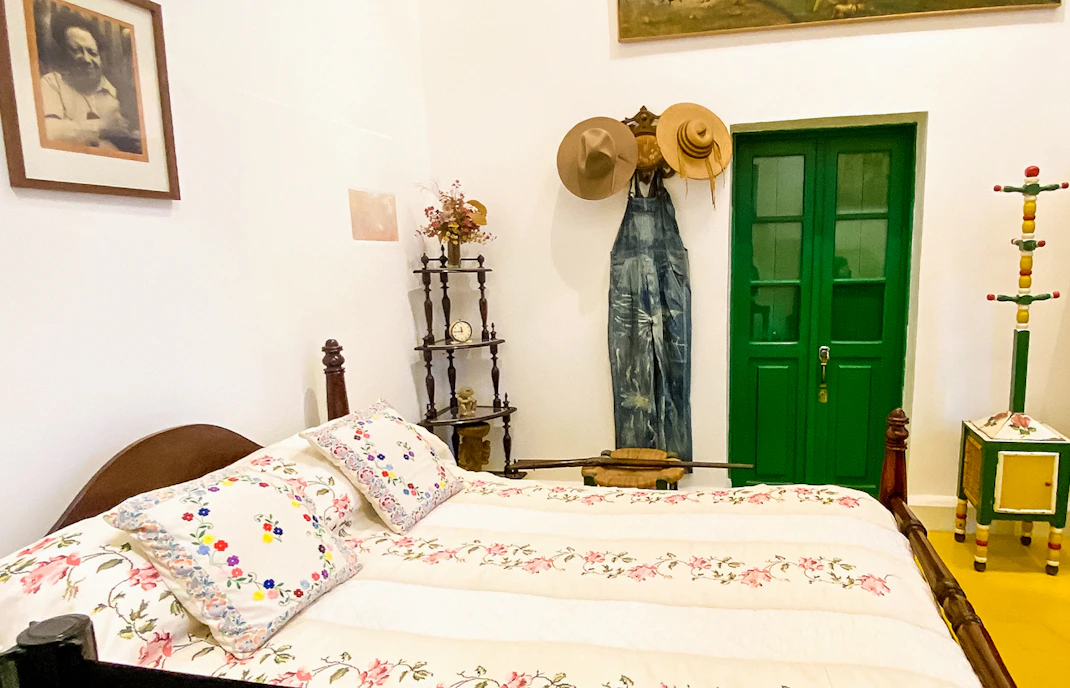
Bedroom and recovery spaces
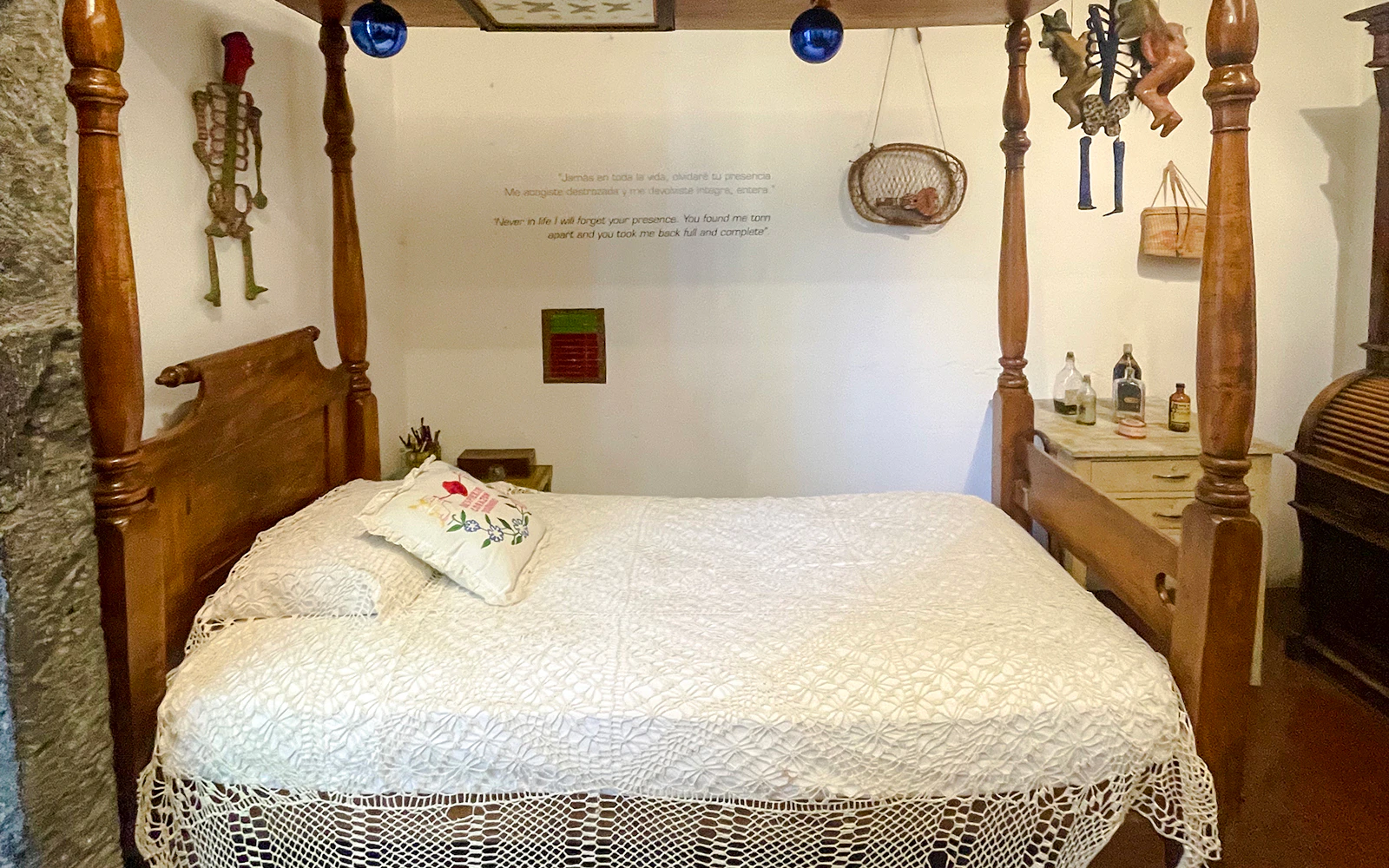
These rooms reveal the harder side of the house. Medical supports, the bed, and intimate furnishings connect the museum to Frida’s injuries and periods of confinement. They often shift the visit from admiration into something quieter, because the physical cost of her life becomes unmistakably visible.
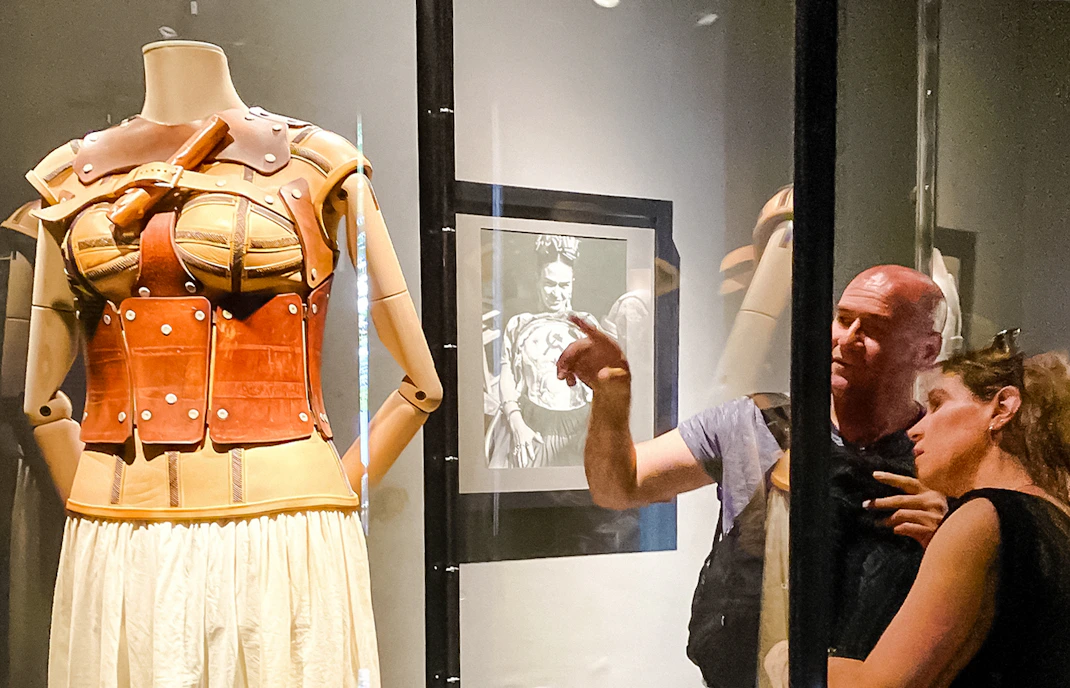
Temporary exhibition and exit areas
Depending on the current display, the final section can add archival context, photography, or themed material that changes over time. It keeps repeat visits from feeling identical and often rounds out the house with broader interpretation before you exit into the shop and surrounding neighborhood.
| Visit style | What it usually includes | Best for |
|---|---|---|
| Self-guided | Timed entry, room labels, and on some options digital audio guidance | Independent visitors, repeat museum-goers, and anyone who wants to linger |
| Guided | Timed entry plus expert storytelling outside or in the garden, with some options adding Anahuacalli Museum or transfers | First-timers, Frida fans, and visitors who want stronger context |
Entry process
Book online in advance and treat your selected time slot as fixed. Casa Azul is closed on Mondays, tickets regularly sell out, and late entry may not be honored. Double-check that you’re booking the Frida Kahlo Museum (Casa Azul), not the separate Museo Casa Kahlo, also called the Red House.
Best times
The calmest interior experience is usually the first entry slot or a later-afternoon visit, when there are fewer bodies packed into the smallest rooms. Midweek is typically easier than Saturday or Sunday, and late morning tends to feel the most crowded inside.
Duration
Plan 60–90 minutes for a satisfying visit. A quick pass takes about 45 minutes, but that can feel rushed in crowded rooms. If you like reading labels, pausing in the courtyard, and taking in temporary displays, give yourself up to 2 hours.
Your route
- Courtyard → get your bearings before the tightest rooms fill up.
- Living spaces → notice how domestic objects frame the visit.
- Kitchen → focus on color, pottery, and cultural identity.
- Bedroom → look for the mirror and recovery details.
- Studio → spend your longest pause here.
- Garden → decompress and reset your pace.
- Final exhibits → check current displays before exiting.
Rules and accessibility
Photo policies can vary by exhibition and staff instruction, but flash, tripods, and professional equipment are generally not allowed. Large bags may be restricted. Accessibility is partial rather than seamless: ramps exist in some areas, ground-floor spaces are easier, and tight passages can still be challenging.
Tips
- If one room is packed, don’t force it — pause in the courtyard and circle back.
- Look closely at objects tied to recovery, not only the framed art.
- Guided products such as the Frida Kahlo Museum Guided Tour add context, but explanations are typically given in the garden, not inside the rooms.
- The Frida Kahlo & Anahuacalli Museum Skip-the-Line Tickets work well if you want a self-paced visit with a broader Frida-and-Diego day.
Frequently asked questions about what’s inside Frida Kahlo House
Inside Casa Azul, the experience is intimate, emotional, and much smaller in scale than many visitors expect. You move through preserved living spaces rather than large gallery halls, so the strongest impression usually comes from the house itself — the studio, bedroom, kitchen, courtyard, and Frida’s personal objects. If you’re deciding whether it’s worth entering, the best way to think about it is as a biographical house museum, not a major painting museum. See What to expect inside Frida Kahlo House? for the overall feel.
Visitors typically see the courtyard, key living spaces, kitchen, bedroom areas, studio, and selected exhibit rooms. The route is controlled, so you follow the museum’s sequence rather than freely wandering through every corner of the house. That means you’ll get a coherent look at the most meaningful spaces without full residential access. The public-facing rooms focus on Frida’s domestic life, creative work, and recovery. For a room-by-room flow, jump to Inside Frida Kahlo House.
Yes, but the interior is more famous for personal artifacts than for a large concentration of Frida’s best-known paintings. What gives Casa Azul its power is the mix of original objects — furniture, clothing, medical supports, photographs, studio tools, and select artworks — all shown in the place where she lived. If you’re expecting wall after wall of major canvases, recalibrate a little. The value here comes from context and closeness. The Top highlights inside Frida Kahlo House section shows what to focus on.
Most visitors spend 60–90 minutes inside. If you move quickly, you can finish in under an hour, but that often feels rushed, especially when rooms are crowded and you need to wait for a clear view of the most personal objects. If you like reading labels, pausing in the courtyard, and catching any temporary exhibition, allow closer to 2 hours total. The house is not huge, but its emotional weight slows people down. For pacing advice, see How to explore the Frida Kahlo House.
Usually, personal photography is permitted in at least some areas, but restrictions can change by exhibition, room, or staff instruction. Flash, tripods, selfie sticks, and professional camera setups are commonly restricted, and some ticketed experiences explicitly ban professional gear inside the museum. Because policy wording can vary across sources, it’s smart to expect controlled photography rather than unlimited shooting. The safest approach is to follow posted signs and staff guidance room by room. For practical context, check How to explore the Frida Kahlo House.
Small personal items are usually easier to manage than backpacks or oversized bags. Multiple products for Casa Azul note that large bags, suitcases, and bulky luggage are not allowed inside, and this is one of the most common avoidable problems at the entrance. Since the house is compact, bag restrictions help keep movement possible in narrow rooms. If you’re carrying more than a day bag, assume you may be stopped or asked to store it elsewhere. This is especially important if you’re visiting straight from another part of Mexico City.
Accessibility is partial, not total. Current product details indicate ramps in key areas and access to the garden and ground-floor galleries, but they also suggest that not all interior spaces are equally easy for a person using a wheelchair or anyone with limited mobility. The main issues are narrow passages, crowd density, and the historic-house layout. Wheelchairs may not be available on-site, so bringing your own mobility aid is the safer assumption. If accessibility is a deciding factor, contact the museum directly before booking.
Yes, temporary or rotating exhibits can change part of what you see, which is one reason repeat visits don’t feel identical. Some guided products explicitly include access to temporary exhibitions along with the house and garden. These displays may focus on archives, photography, clothing, or themed material connected to Frida and Diego Rivera. Because they change, it’s worth checking what’s currently on view before your visit if you’ve been before or have a specific interest. The core house remains the main draw either way.
No, you can absolutely visit on your own. But whether you’ll want a guide depends on what you’re hoping to get from the house. If you mainly want to absorb the atmosphere and move at your own pace, a self-guided visit works well. If you want stronger context on Frida’s health, politics, marriage, and symbolism, guided products can add a lot — even though commentary is often delivered in the garden rather than inside the rooms. Compare styles in How to explore the Frida Kahlo House.
Casa Azul feels more personal and autobiographical than most of Mexico City’s large art museums. You’re not there for scale, long galleries, or a broad survey collection; you’re there for proximity to a life. Compared with bigger institutions, it can feel more emotional, more crowded, and much quicker to see — but also more memorable if Frida Kahlo interests you. Compared with other historic homes, it’s more curated and far more in demand. The tradeoff is simple: less breadth, more intimacy.
More reads

Plan your route through Casa Azul
Get a practical walkthrough of the house layout, crowd flow, and how to pace your visit without missing the rooms that matter most.
See the standout objects inside the house
Go straight to the easel, mirrored bed, kitchen details, and personal artifacts that give the house its strongest emotional pull.
Understand the house room by room
Follow the visitor flow through the courtyard, studio, kitchen, bedroom, and final exhibit spaces before you book your entry time.
Check rules, comfort, and accessibility notes
Review the details that shape the visit on the ground, including bags, photography, timing, mobility, and crowd-related expectations.
Frequently asked questions about what’s inside Frida Kahlo House


